
From preparation to confidence: how Meander is deploying SAM® more and more broadly
In the series SAM – 5 years in practice we look back, together with hospitals, on their experiences with the disinfection robot SAM. No polished success stories, but honest real-world accounts: what works, what creates friction, and what it takes to make a new technology a true part of the daily care process. This time we are guests at Meander Medical Centre, where cleaning partner Gom has played a fixed role for many years.
We speak with Sharine Axson, infection prevention specialist at Meander, and Thijs Jonkheer, regional manager at Gom. For about fifteen years, Gom has been responsible for the entire cleaning service within Meander. This partnership was recently extended for another five years. That long-term relationship forms an important foundation.
"We know the hospital, the departments and the people," Thijs explains. "That makes it possible to act quickly and build together."
Corona as a reason to look ahead
The direct trigger to start with SAM arose during the corona pandemic. That period made painfully clear how vulnerable processes become when pressure increases.
"Corona was a wake-up call for us," says Thijs. "We realised we had to be better prepared for outbreaks. Not just reacting when things go wrong, but thinking in advance about how you can act quickly, safely and in a controlled way.
SAM is an autonomous disinfection robot that works with UV-C light. After the regular cleaning, SAM autonomously drives to multiple positions in a room and delivers a validated UV-C dose at each position. This way every room receives the same treatment, without chemicals, and afterwards a report is saved showing exactly where, when and for how long disinfection took place.
On the advice of the Infection Prevention department, GOM came into contact with SAM. Because Gom had already been working at Meander for so long, the introduction went smoothly. There were short lines with the Infection Prevention department, and from the start there was close collaboration on procedures and protocols.
"We can just drop in on each other," Thijs says. "We genuinely figure out what's needed together. That partnership has worked really well from day one." Sharine agrees: "We are incredibly happy with GOM as our cleaning partner."
A blessing in disguise
The start in 2022 was deliberately kept small. A pilot was chosen on a single department, with clear agreements about when and how the robot would be deployed. The goal was not only to test the technology, but above all to gain insight into the process: what does the robot do, what remains for manual disinfection, and how do you embed this in a protocol?
Even before the pilot had been fully completed, Meander was confronted with a VRE outbreak. Although SAM was still officially in the test phase, Infection Prevention decided immediately to deploy the robot.
"That felt logical," says Sharine. "We were well prepared and had clear agreements in place. Everyone knew exactly what to do."
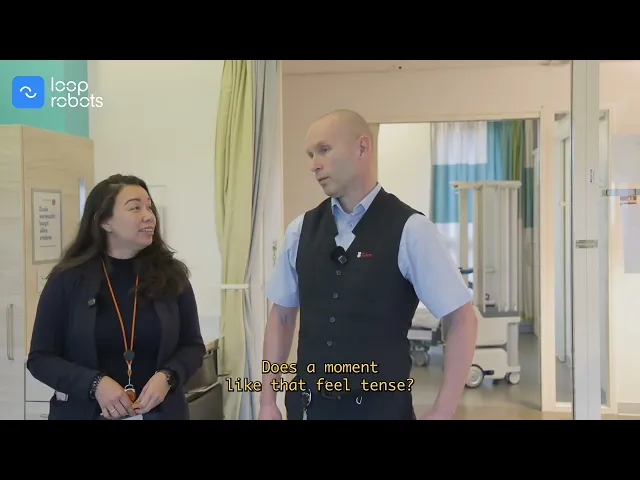
SAM's role during that outbreak turned out to be significant. Through regular testing it became visible that the contamination was decreasing quickly and the situation was being brought under control. It wasn't tense, precisely because the preparation had been so thorough.
In hindsight, Thijs even calls it a blessing in disguise. "We were glad we had SAM. It immediately gave us the proof that SAM works."
Actually, in the beginning the question on the department was mainly: what is UV-C, how does it work and what exactly does SAM do? But after two weeks that completely turned around to: this is what we want. They even started requesting the use of SAM.
Change on the work floor requires clear choices
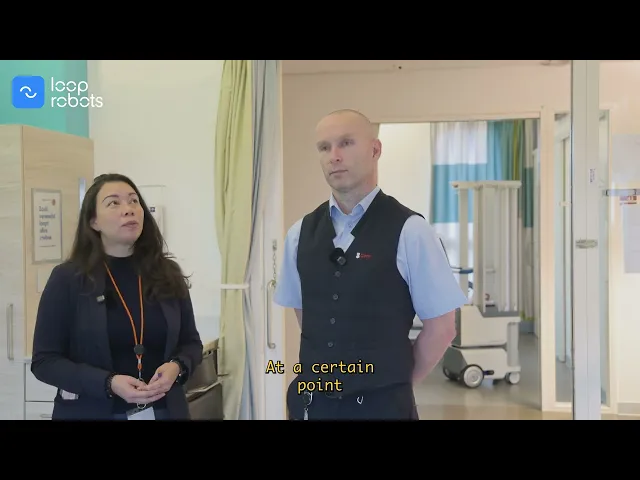
That success did not mean that everything on the work floor went smoothly straight away. Change remained difficult. Part of the team has been working at Meander for twenty to thirty years and was used to always disinfecting with chlorine.
"A robot then feels fragile, maybe even scary," Thijs says. "You really have to take your people along with you."
The breakthrough only came when Thijs made a clear choice.
"We were very explicit: SAM is the standard, chlorine is the exception. We really steered on that and checked it."
From that moment, usage visibly changed. Doubt decreased, confidence grew and SAM became a fixed part of daily practice.
His message to other hospitals ties in directly with this. "As a manager, be visible and clear. Coach your people, explain why you are doing this and dare to make choices."
Quality as a reason to look further
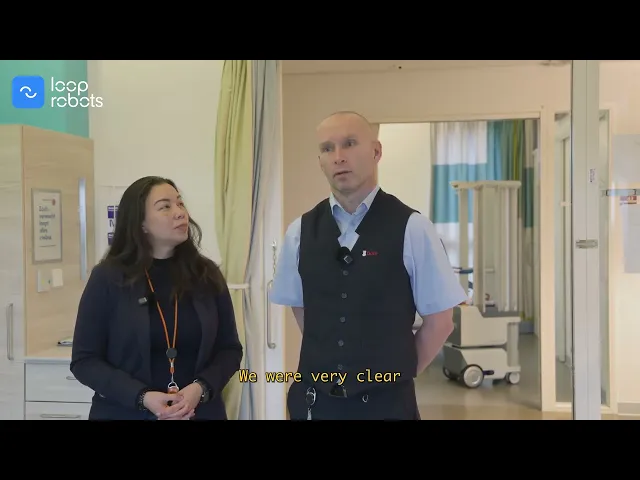
The confidence that was built up over time made it possible to also use SAM beyond its original deployment. For Thijs, the conviction is not about speed or efficiency, but about quality and certainty. He makes that insight concrete:
"It is actually a very simple calculation. If you look at where the UV-C light reaches… If we had to do that by hand, we would be busy for hours. That light reaches places where we, with a cloth, never get."
That realisation changed the way disinfection was viewed. No longer just as an action, but as a quality issue: how do you know for sure that you reach everything, also where you can't see it?
The compounding room of the hospital pharmacy as proof
That insight became concrete when employees of the hospital pharmacy approached Thijs with a practical question. They asked whether they could borrow chlorine tablets. From periodic measurements – which are mandatory in the compounding room because of strict regulations – it had emerged that a fungus had been detected. The exact source, however, could not be identified, despite multiple checks.
The idea was to manually disinfect the entire cleanroom with chlorine. To Thijs, that did not feel like the right solution.
"That is an enormous job," he says. "Especially when you don't know where the source is. You can be busy for days and still not know for sure whether you've reached everything."
He therefore proposed deploying SAM. For the hospital pharmacy employees this was new; they had never worked with the robot before. After consultation with hospital pharmacist Louise Andrews, they decided to give it a try.
Although SAM had never been deployed in the hospital pharmacy at Meander before, Thijs was able to assess well how the robot could be used safely and effectively. SAM was deployed on the powerful mode. After that, new samples were taken and tested.
The outcome was convincing: the fungus was no longer detected.
"They were enormously happy," Thijs says. "And we saved an enormous amount of work. Two hours of robot deployment replaced days of manual cleaning, especially in a situation where you don't know exactly where the problem is located."
Candida auris: when readiness makes the difference
The experiences with SAM in other parts of the hospital had already shown the difference the robot can make. But some situations demand more than confidence alone. Sometimes certainty is not a wish, but a requirement. That became tangible when Meander was confronted with a patient with Candida auris.
Candida auris is a relatively new and highly resistant fungus that is being found more and more often in hospitals worldwide. The fungus poses a particular risk to vulnerable patients and is known for its ability to spread through the environment and survive on surfaces for long periods. Precisely for that reason, a suspicion often immediately leads to heightened alertness and additional measures.
In this case, the patient had been moved between several rooms during their stay. That made the situation immediately more complex.
"Then you know: this is not a standard situation," Thijs says. "Every space where this patient has been has to be taken seriously."
That observation made the choice clear. When Infection Prevention called with the request to deploy SAM, no further consideration was needed. The robot was used to disinfect all the rooms involved in a controlled and complete manner. Especially with a pathogen like Candida auris, which is difficult to remove and can spread through the environment, SAM offers the predictable and repeatable quality that is needed to move forward with confidence.
"What's nice here is that Thijs even offered to let SAM run multiple times in the room," Sharine says. "That way we could also include care materials such as commodes in the disinfection. That would have been a much more complicated story manually."
Afterwards, environmental cultures were taken to check whether the rooms were indeed clean and safe. Those cultures turned out to be negative. For Infection Prevention, that was an important confirmation. Not only because the result was reassuring, but also because it showed that the chosen approach works and can be repeated.
"At such a moment you don't want any doubt," says Sharine. "SAM, combined with the results from the environmental cultures, gave us the confidence to move on."
From an acute situation to structural readiness
That experience once again made clear that readiness is not an incident, but a deliberate choice. The Corona pandemic had already shown Meander and Gom how important it is to be flexible and able to scale up quickly when necessary. Outbreaks cannot be planned and pathogens are continuously changing. What you can do is make sure that you are prepared.
The deployment of SAM fits exactly within that way of thinking. Not as a solution for one specific problem, but as a fixed link in a broader approach. Whether it concerns a VRE outbreak, a fungus in the hospital pharmacy or a Candida auris case: the organisation knows that it can act quickly, in a controlled manner and with confidence.
"These are the moments when you notice why we ever started this," Thijs says. "It is an investment in the future, and that doesn't start later, but now."
Sharine wholeheartedly agrees and has a clear message for hospitals that are still hesitating:
"To the hospitals that are hesitating, I want to say: don't hesitate. I really think you can gain a great deal when it comes to the quality and efficiency of your disinfection."
Posted in
Related Posts


Want to know more?