
Success from day one: how Isala implemented SAM® with care and conviction
At many hospitals, introducing a new way of working takes time. In the series 5 years of SAM in practice, we often see usage grow step by step and support develop gradually. At Isala hospital, things went differently.
Since the start in December 2025, the disinfection team has been using SAM daily, as a fixed part of the terminal cleaning of isolation rooms. From day one, the robot has been part of daily practice there. That is no coincidence, and certainly not something to take for granted.
In this edition of 5 years of SAM in practice, we look at how Isala hospital approached this. What created such broad support from the start, and why was the usual resistance to change absent?
Between patient safety and bed availability
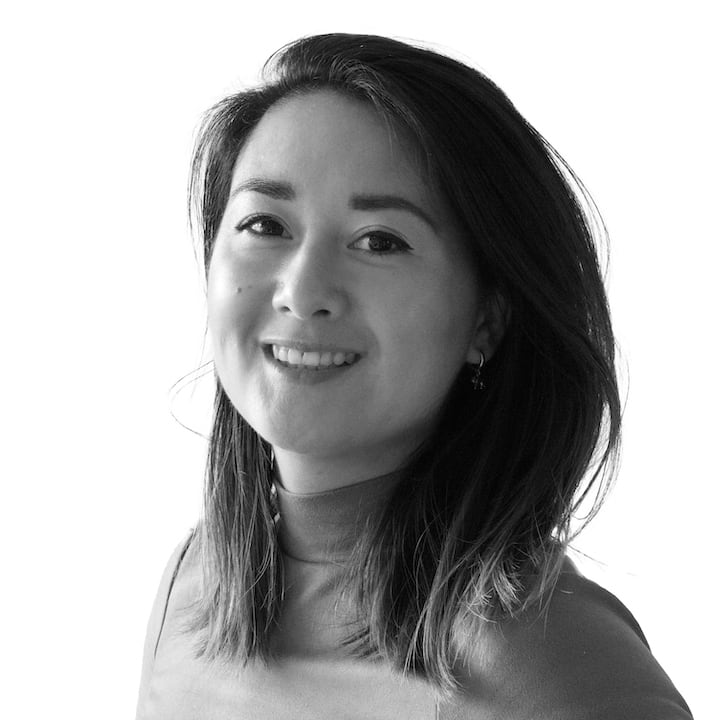
We speak with Marloes van Dijk, facility manager (cleaning & disinfection), and Sem Frericks*, infection prevention specialist in training and project lead of the SAM pilot at Isala hospital. Their collaboration is characteristic of the entire process.
“This is not a facilities project or an IP project,” they emphasize. “It belongs to both of us, together.”
For certain micro-organisms, Isala deliberately chooses additional, automated disinfection during the terminal cleaning of isolation rooms. Think of VRE, CPE and resistant Acinetobacter. Precisely with these pathogens, which can be highly resistant to antibiotics, you want maximum certainty in the disinfection process.
At the moment, this is done with hydrogen peroxide.
“Hydrogen peroxide is effective and validated,” Sem explains. “But it also has an impact on the organization of care.”
“The turnaround time is long,” Marloes adds. “A room is unavailable for at least nine hours. At weekends, or when several rooms need terminal disinfection at the same time, that adds up quickly. That directly affects bed availability and planning.”
So the need for additional disinfection was never in question. The question was how to organize it in a way that is both qualitatively reliable and logistically workable.
“We would, for example, also like to treat MRSA with automated disinfection,” says Sem. “But with the turnaround time of hydrogen peroxide, that is not feasible in practice.”
That is where the tension arose: maximum certainty for the patient, without rooms being out of circulation for long periods.
Slow down first, then accelerate
When SAM came their way, the reflex was not to start immediately. Quite the opposite. Isala deliberately took the time to investigate whether UV-C disinfection would truly add value.
“Internally, we also heard: we could start doing this next week,” says Sem. “But we didn’t want that. We first wanted to understand what the added value is, how it works, and whether it fits within our infection prevention strategy.”
That choice led to a preparation process of more than six months. Other hospitals were visited, experiences were exchanged, and requirements were sharply defined. From the beginning it was clear: if we do this, we do it properly.
Colleagues from various disciplines joined. With a clear project plan, Sem guided the group through the preparatory phase. There was a structured overview showing who was responsible for what and which topics still required decisions.
Marloes adds: “Mark from Loop Robots also joined the meetings. That was helpful, because questions about SAM could be answered immediately. At the same time, Sem and I built up the necessary knowledge ourselves. By the end of the process, we could answer those questions independently. That is really valuable.”
A pilot with a clear framework
The use of SAM was not started as an open experiment, but as a pilot with a clear framework. From the outset, it was established that the outcomes had to be substantiated.
The pilot was given a duration of one year, with pre-agreed go/no-go moments and fixed evaluation points. Every month, the results are reviewed and the appropriate next steps are determined.
“We don’t want to decide on gut feeling,” says Sem. “We want to make well-founded decisions.”
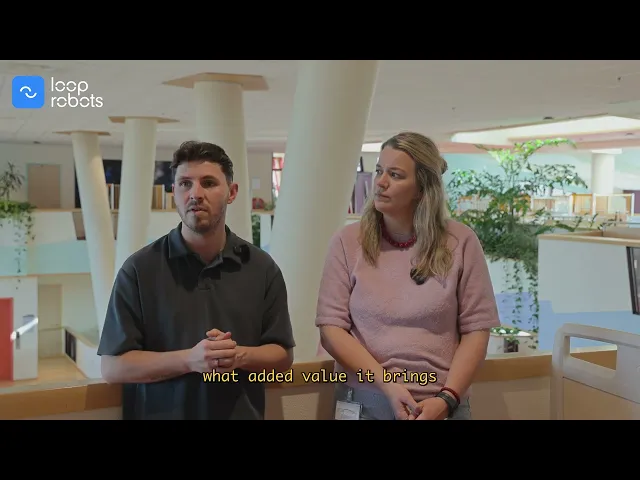
In December 2025, the pilot started on the AOA. That, too, was a deliberate choice. It is a department with high patient turnover, a broad range of micro-organisms, and a logistically favorable location within the hospital. This makes the AOA a realistic and relevant test environment.
Over the course of the year, the robot’s working area will be gradually expanded to other departments.
Marloes: “We don’t just want to see whether it works, but also how it works in practice. How do the logistics with the robot go? How many robots do we ultimately need for the entire hospital? And for which isolation protocols will we deploy automated disinfection?”
Measurement as the foundation
The agreement to make substantiated decisions required a structured way of measuring. From the start, the pilot was therefore monitored intensively.
This was not only about the functioning of the robot itself, but about the entire process around it. How does the pre-cleaning go? Is the robot positioned correctly? Does every room receive the right UV-C dose? And what does this mean for turnaround time and workload?
To make this visible, the hospital works with, among other things:
Environmental cultures, for example for MRSA and VRE
Dose meter stickers to check UV-C exposure
Shadowing members of the disinfection team
Structural time measurements
Feedback from both staff and departments
During audits, the entire trajectory is followed: from manual pre-cleaning and disinfection to positioning SAM and completing the cycle.
“We watch along, ask questions and test whether the work instructions are clear,” Sem explains. “And just as importantly: how do staff experience working with SAM?”
That systematic approach is visibly paying off. SAM has been used daily by the disinfection team from the start, and the way of working was quickly adopted. Only a minor adjustment to the work instructions was needed.
Marloes: “At one point, staff stopped applying the UV-C dosimeter stickers. The measurements kept coming out so well that they thought: it’s fine. Still, we asked them to keep doing it. Precisely because you want to keep demonstrating that the process is right, even when nothing unusual comes out.”
The microbiological results also inspire confidence.
Sem: “Those results are positive. After disinfection, no micro-organisms have been found in the cultures. That confirms that the process does what it is supposed to do.”
Buy-in on the work floor
Although the preparation was thorough, Marloes and Sem anticipated that the introduction of SAM would raise questions. Especially within a dedicated disinfection team that is used to working with great precision and craftsmanship.
“We honestly expected more resistance,” says Marloes. “Questions like: will a robot replace people? Is this really as good as manual work? We have an incredibly strong team that stands for quality. Then it is quite something to entrust part of that process to technology.”
That is precisely why the team was actively involved from the start.
“We included someone from the disinfection team in the working group,” says Marloes. “That created ownership. It wasn’t something imposed on them, but something they were part of themselves.”
That involvement does not stop after the training. Between the disinfection team and Loop Robots there is a WhatsApp group in which staff can ask their questions directly.
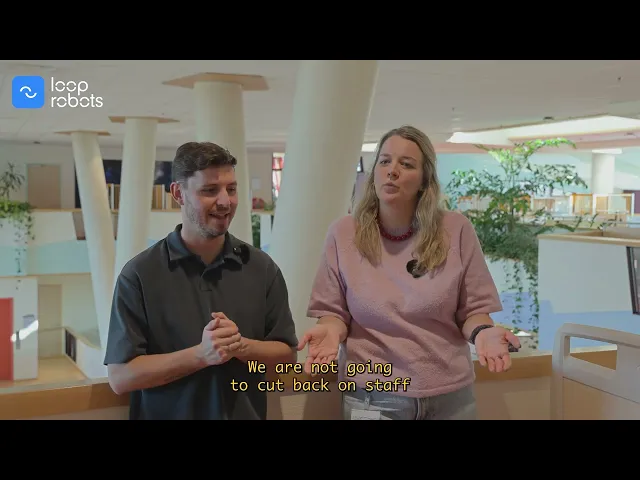
“We get answers very quickly, even on Christmas Day,” says Marloes. “That helps the team enormously in the daily use of SAM.”
The close involvement of infection prevention also played an important role. The fact that IP watched and co-decided from the start gave confidence in this way of disinfecting. The positive test results strengthened that confidence further.
“It is a reproducible process,” says Sem. “And the manual work remains. SAM supports the team; it doesn’t take away their craftsmanship.”
There were also practical questions beforehand about the layout of the rooms. Because of the hospital’s characteristic ‘butterfly shape’, no two patient rooms are the same. That seemed a potential challenge for an automated process. Yet that expectation caused no problems.
“We had expected to have more trouble with the different room layouts,” says Marloes. “But the staff guide SAM well, and in the results we see no deviations. In fact, the question we now get most often is: when can we deploy SAM in other departments?”
Gains in time and sustainability
The fact that staff are asking for expansion is not necessarily surprising. In practice, using SAM delivers a clear time saving.
Where hydrogen peroxide requires at least nine hours before a room is available again, with SAM that turnaround time can be shortened considerably, to just 45 minutes. That difference has direct consequences for the organization of care.
“That has an enormous impact on planning, room availability and workload,” says Marloes. “We only have one hydrogen peroxide device. When there are multiple isolation cases at the same time, the waiting time adds up quickly. Especially at weekends. With SAM, there is much more flexibility.”
That flexibility makes it possible to switch faster, without compromising the quality of disinfection.
But time is not the only benefit. From an infection prevention perspective, sustainability also plays a role.
“SAM uses only electricity and no chemicals,” says Sem. “That makes it relatively inexpensive to use and fits within our sustainability ambitions.”
Moreover, because UV-C leaves no residue, no post-treatment is needed. That not only shortens the turnaround time, but also simplifies the process.
In this way, gains in time, quality and sustainability come together in one way of working.
Looking ahead
The pilot continues, but the direction is becoming increasingly clear. Expansion to other departments is explicitly in view, always linked to the agreed evaluation moments and substantiated decision-making.
“If the results and experiences continue to develop like this,” say Marloes and Sem, “then we see SAM as a permanent part of our disinfection strategy.”
At the same time, they emphasize that the success lies not only in the technology, but in the approach.
“Go and look at other hospitals,” Marloes advises. “Learn from each other. And involve from the start the people who will be working with it. That really makes the difference.”
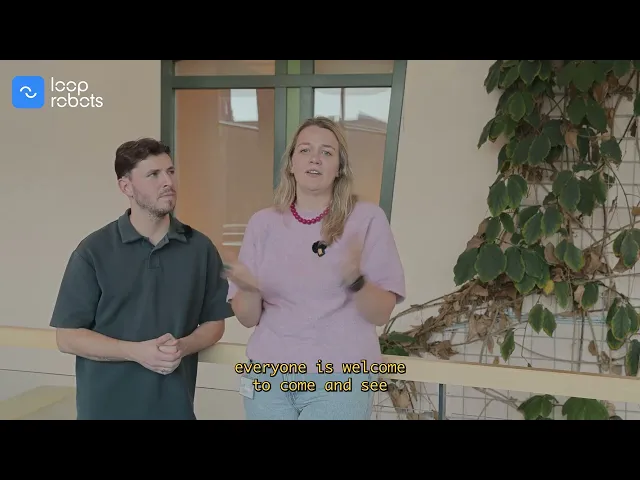
According to Sem, the strength lies in moving forward together. “Take the time to understand it properly, test it against your own infection prevention strategy and make clear agreements. That is how you create trust.”
The implementation of SAM at Isala has not been a fluke, but the result of careful preparation, collaboration and well-founded choices.
——————————————————————————————————————————
*At the time of this interview, Sem Frericks was an infection prevention specialist in training and project lead of the SAM pilot at Isala hospital. He now works as an infection prevention specialist at Deventer hospital.
Posted in
Related Posts


Want to know more?